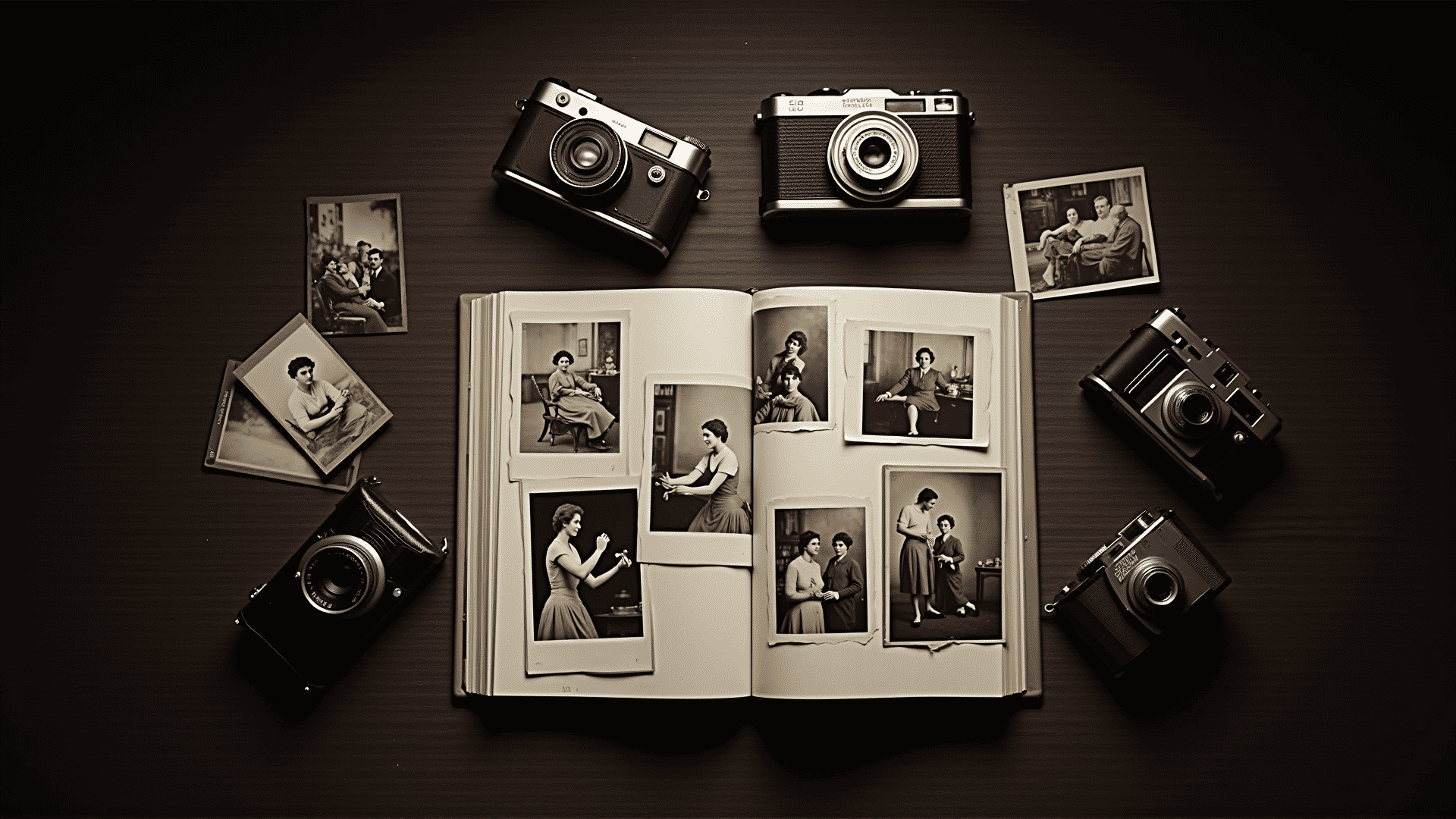
From the early days when light and chemistry were harnessed to capture fleeting moments, to today's digital wonders that fit into our pockets, the evolution of image capturing has been nothing short of extraordinary. This journey has not only paved the way for technological innovation but also transformed the way we perceive and document the world around us.
The story begins in the early 19th century. The first permanent photograph, known as "View from the Window at Le Gras," was taken by Joseph Nicéphore Niépce in 1826 or 1827. This pioneering effort required an exposure time of several hours and laid the foundation for future advancements. Niépce's work sparked the interest of Louis Daguerre, who developed the Daguerreotype process. This technique significantly reduced exposure time and produced clearer images, marking an important milestone in capturing imagery.
Around the same period, another key figure, Henry Fox Talbot, was experimenting with what would become known as the Calotype process. This method allowed for multiple prints from a single negative, introducing the concept of reproducibility, which remains integral to the field. The Calotype had its limitations in terms of detail compared to the Daguerreotype, yet its influence on subsequent technologies was profound.
As we moved into the 20th century, advancements accelerated with the advent of roll film, invented by George Eastman. This innovation made image capturing more accessible and fostered the development of products suitable for the general public. The accessibility of this medium played a crucial role in democratizing the ability to document everyday life.
The introduction of color film by Kodak in the 1930s brought a new dimension, allowing scenes to be captured in vibrant hues. This era also saw the emergence of influential artists such as Ansel Adams, whose mastery of monochrome techniques and keen eye for composition elevated the medium to an art form.
With each passing decade, developments in electronic technology set the stage for the digital revolution. The creation of the digital sensor in the 1960s and 1970s by researchers such as Willard Boyle and George E. Smith marked the beginning of a new era. This technology paved the way for the development of digital devices capable of capturing high-quality images without the need for film.
Entering the 21st century, advancements in semiconductor technology, miniaturization, and connectivity transformed smartphones into powerful tools for capturing and sharing moments instantaneously. Innovations continued with the rise of social media platforms, giving individuals unprecedented access to publish and consume visual content, driving societal and cultural changes.
Today, the field is a testament to human ingenuity and a blend of art and science. Figures throughout history, from Niépce and Daguerre to the engineers of today's digital age, have all contributed to a legacy of progress. The contemporary era offers advanced features such as high-resolution sensors and machine learning that enhance creativity and storytelling.
Looking back at the evolution of this medium, it is clear that what began as an experiment in capturing light and shadow has grown into a global phenomenon shaping how we see and understand our world. As we move forward, the potential for new innovations continues to inspire photographers, artists, and technologists around the globe.